Politics, too, is an arena that has engulfed us and miniaturized us into labels that brook no deviation. Once we embrace a label, we are trapped in it and perform our duties as mandated. We must slant our views on all sensitive subjects, shut out evidence to the contrary, celebrate victories on our side with disproportionate glee, and spin our defeats expertly. It is our solemn duty to fight against a contrary opinion and to seek refuge in the banality of like-mindedness. We are convinced we are right, and that can be an exacting burden to carry.
From article : An Ode to Indifference by Santhosh Desai
confirmation bias
(Un)Certainity
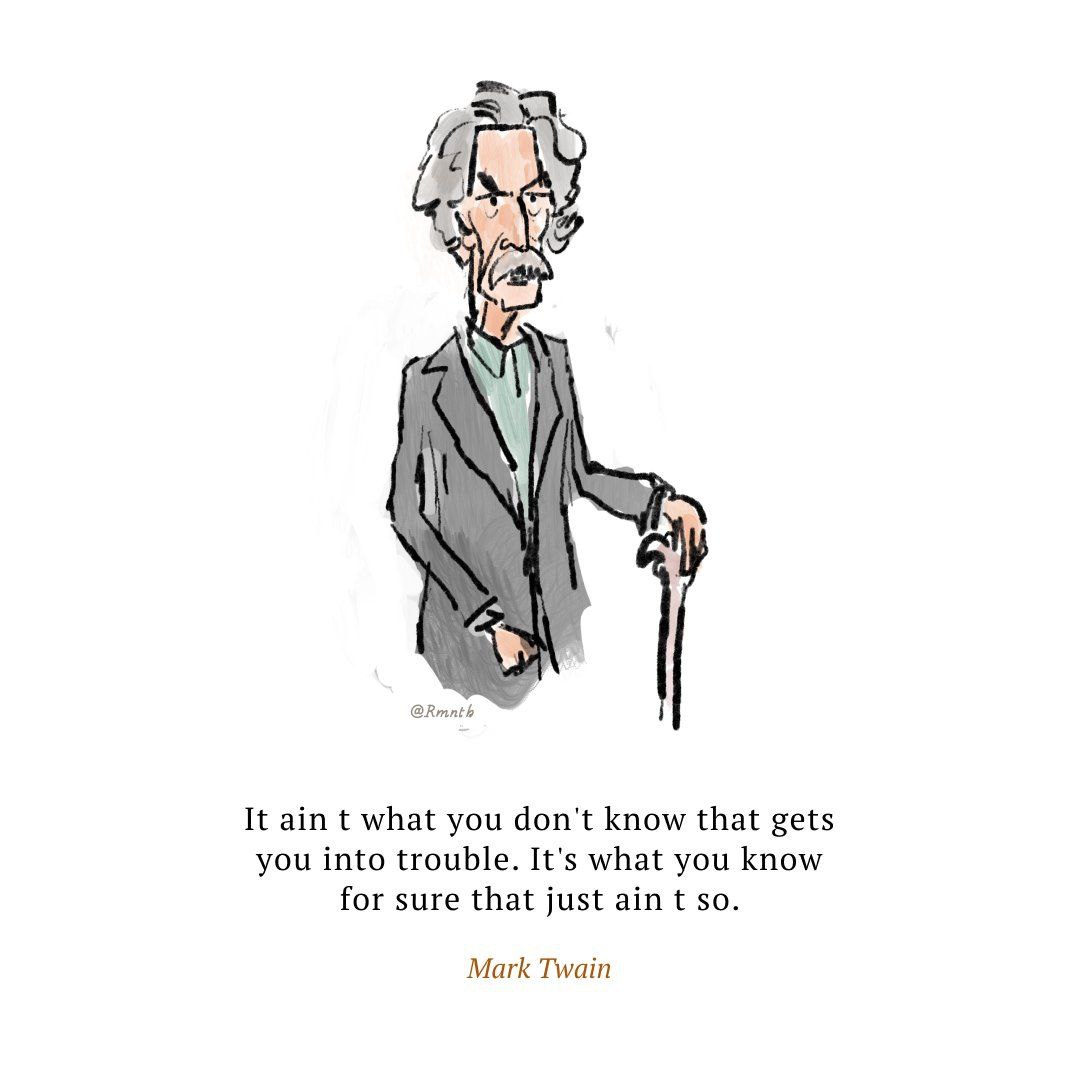
We often encounter individuals who suggest or advise something with such strong conviction and confidence that we never bother to inquire about the source of their powerful argument. For instance, the promotion of ghee, coconut oil, and jaggery as being beneficial for health. Observe how twisted this logic is. While these may be better compared to alternatives like palm oil and sugar, that does not necessarily make them inherently good for health. Frequently, these “knowledgeable” people acquire such information from highly biased and unreliable sources, and then they build their narrative upon it. Over time, this story gets embellished, and they come to firmly believe in the legitimacy of their argument. Confirmation Bias plays a huge role here.
Art of Reading

Yet another way to expand experience.
Read the full interview of Elisa Gabbert by Austin kleon
Anti Curation of Books
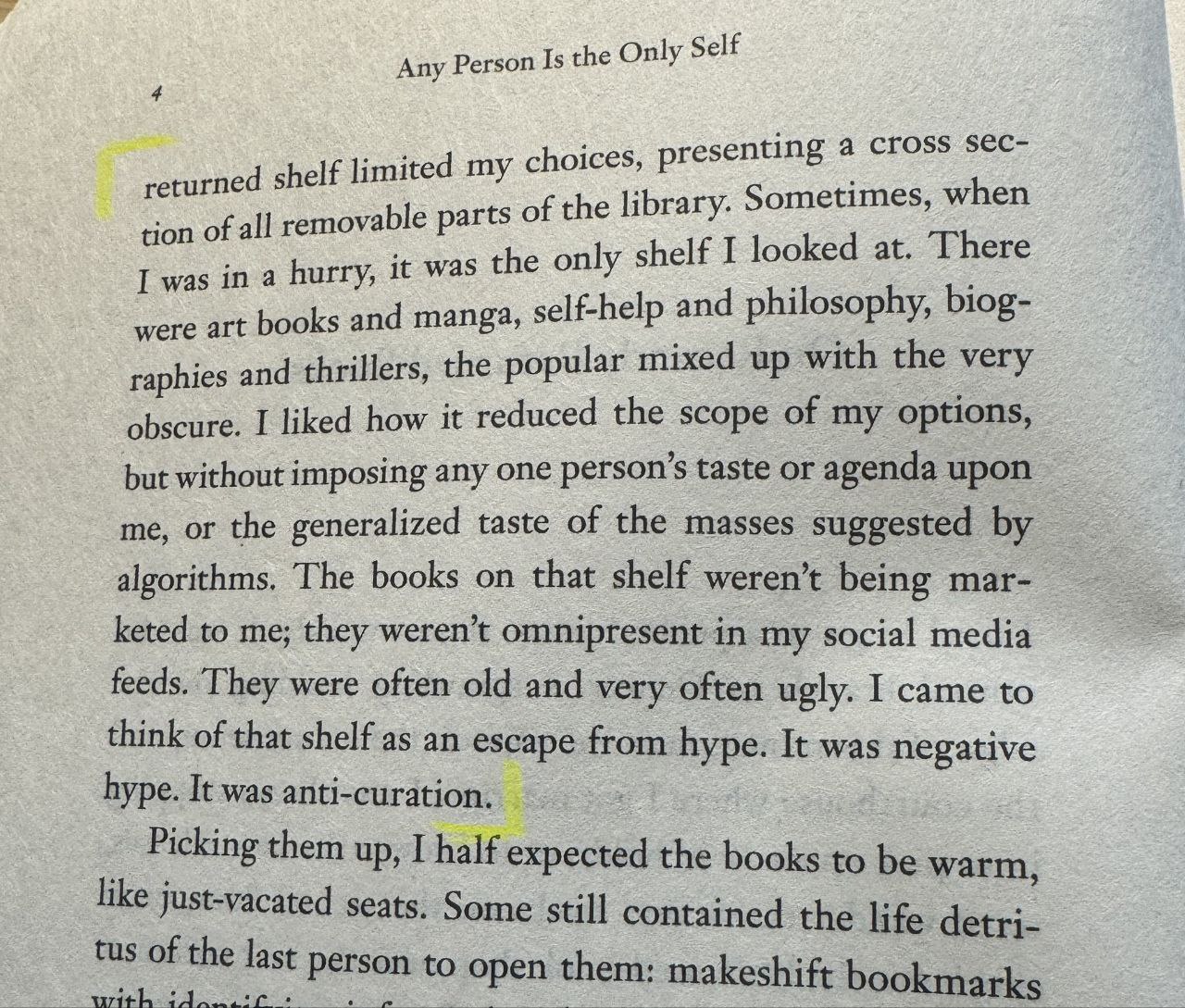
Anti curation= fight against recommendations by algorithms
Recommendations
You’ve likely noticed that since the rise of machine learning and big data, nearly all your online activities are tracked and compiled into extensive datasets. This has paved the way for countless recommendation apps tailored to your consumption habits.
Now, you receive suggestions for new movies based on your viewing history, books aligned with your past reads, clothing that matches your purchasing style, food choices reflecting your yearly orders, and travel destinations echoed in your recent trips. Ads are similarly targeted, reflecting your previous interests.
What’s intriguing is that these recommendations heavily rely on your past behaviors, ensuring that the suggestions are consistent with what you’re already comfortable with. If you have a preference for a particular genre or style, the algorithm will likely reinforce that familiarity with its suggestions.
However, one must question: How will my imagination flourish if I’m not exposed to diverse experiences? How can my perspective widen if I’m shielded from challenges to my confirmation bias?
Monkey Trap

Monkey trap is one of the simplest method to catch monkeys and somehow it has proved to work every time.
Method is simple. Take a hollow enclosure, a can, or an empty tender coconut shell and make a hole of size enough for the monkey to put its hand inside it. Place a banana or any eatable inside this to lure the monkey. Keep it accessible to the monkey.
Eventually a hungry monkey comes, sees the food inside and puts his hand inside. Holds the banana and tries to take its hand outside. Alas! The hole isn’t big enough to allow the monkey’s fist holding the food. Monkey doesn’t realize this and goes into panic mode. While the focus of the monkey is to escape the trap, it forgets that it has to let go of the food it is holding to save his ass.
Monkey trap is highly relatable to the human clinging to that single idea and believing that solution should be around it and getting trapped inside it forever.
Maybe the real solution is to empty the cup and let go of what we already think is true. Looking at the world with the fresh perspective might be the only way to escape the monkey trap.