Society
(Un)Certainity
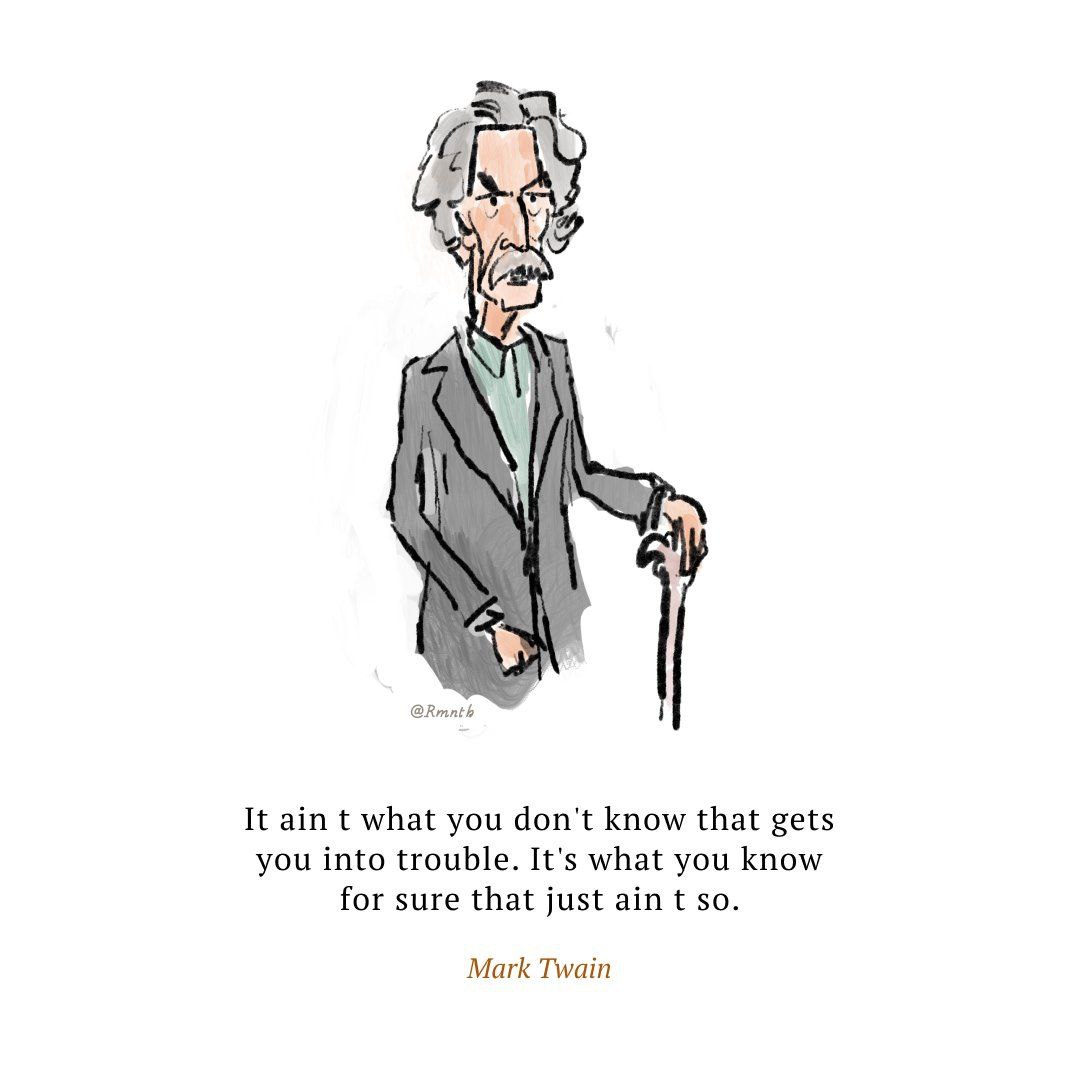
We often encounter individuals who suggest or advise something with such strong conviction and confidence that we never bother to inquire about the source of their powerful argument. For instance, the promotion of ghee, coconut oil, and jaggery as being beneficial for health. Observe how twisted this logic is. While these may be better compared to alternatives like palm oil and sugar, that does not necessarily make them inherently good for health. Frequently, these “knowledgeable” people acquire such information from highly biased and unreliable sources, and then they build their narrative upon it. Over time, this story gets embellished, and they come to firmly believe in the legitimacy of their argument. Confirmation Bias plays a huge role here.
Obsession with Sports and Dance
The mature humans’ ability to indulge so crazily in sports like cricket, football, and the like often amuses me. While playing a game requires physical and mental engagement, the sheer craziness with which they watch and enjoy these sports is simply unexplainable.
Similarly, the idea of watching dance as a form of entertainment is something that only humans seem to be capable of. Dance is essentially a rhythmic, systematic movement of the body parts, either to an external tune or, in some cases, an inner musical rhythm. It must bring joy to the one who performs it, but the human tendency to derive pleasure from merely observing this activity is quite fascinating.

The Luck Factor
The world is filled with people who have worked hard but not got anywhere. That too is the nature of the world. They feel there is something wrong with them because those who succeeded keep extolling their “hard work” but hide the elements of luck. Every escape story has one thing that makes almost all the difference, and it is usually never revealed, as it is almost never hard work.
-Manu Joseph (Article)
Many-Worlds
The Many-Worlds Interpretation in quantum physics appears to be very relevant in India, where diverse classes and cultures lead entirely separate lives, often unaware of one another. While we fantasize of understanding these other worlds, fully living them is nearly impossible. We travel to explore different cultures, but do we truly experience them when we carry the weight of our own identities and remain trapped in our personal bubbles?
Vacation
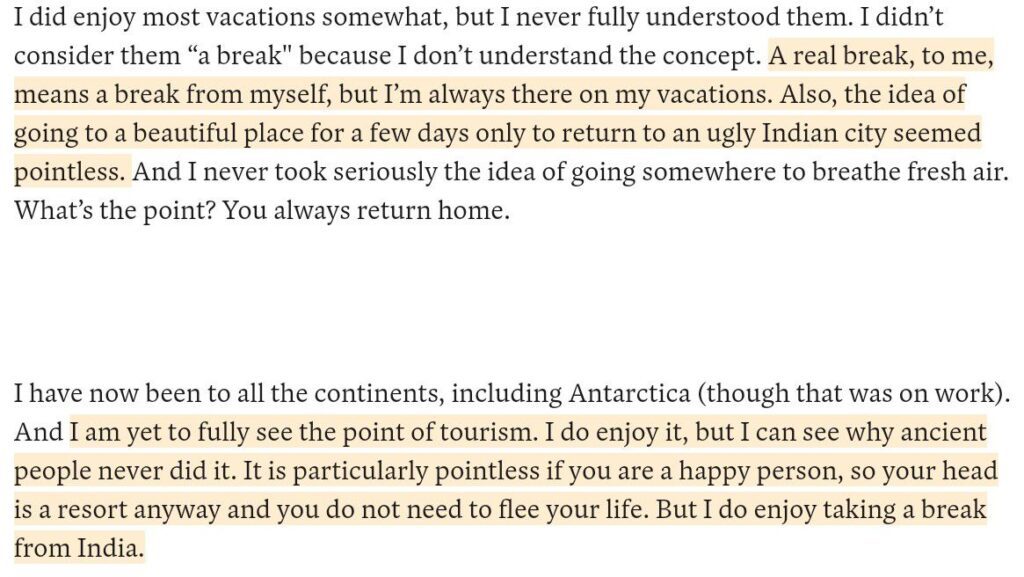
Does a vacation bring any change in me or will I be stuck forever in private trap?
101 Dalmatians effect
I remember there was an animated series named 101 Dalmatians in Cartoon Network which I personally didn’t get connected too much.
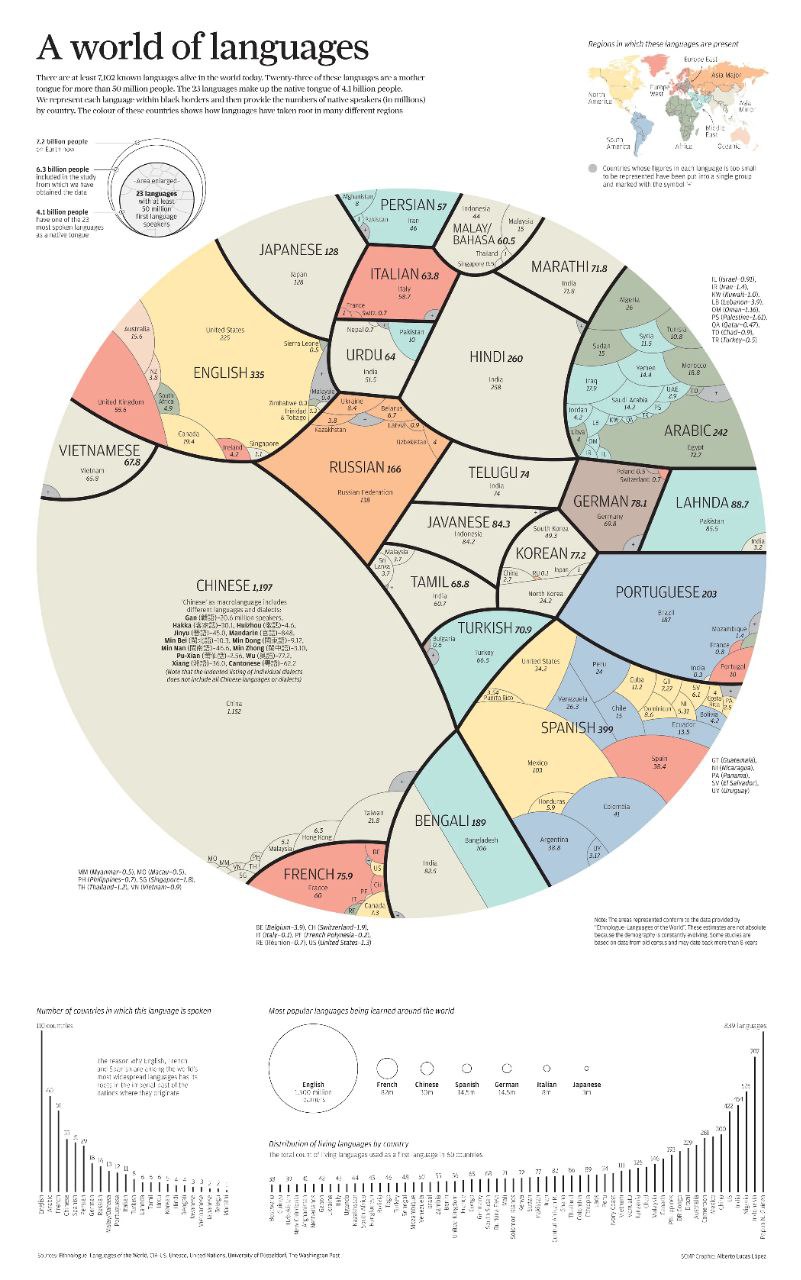
101 Dalmatians effect refers to the phenomenon when the animated and live version of the film named 101 Dalmatian was released during 80s and 90s in America. Fascinated by the cuteness and trendiness of owning the one, demand for the Dalmatian dogs surged to the peak. Breeding of this particular breed of dog got spiked, decreasing the numbers of other breeds. But soon after, the buzz of the movie went down, harsh reality of petting sensitive breed of dogs hit hard, more and more orphan animal shelters began to get filled with these helpless animals.
Recent popularity of the series, ‘Game of Thrones’ had the same effect on the breed Siberian Husky. It’s utter impractical to pet an animal native to the region with the temperature below zero degree, in the tropical countries like India. Yes, it does look cool when you take the poor animal for an evening walk, but definite hard on the natural ways the animal is supposed to live.
Imagine cruising down the pothole-ridden roads of India in a sleek supercar, its low ground clearance scraping against every bump. Or donning a full-sleeve formal ensemble, complete with an overcoat and tie, while battling the sweltering heat of southern India. And what of the humble ‘cutting chai’ and Vada Pav of Mumbai, once the domain of the working class, now gracing the tables of the well-to-do (Of course for the price which has no relevance to their original purpose.)


Tenant and Traveler
What are the similarities between a tenant and a traveler?
- A tenant never feels a psychological sense of belonging to the place. Like a traveler, they are more inclined to escapism. They don’t concern themselves unduly with political or infrastructure changes that might affect their current surroundings. This is because they always have the option to escape, to find a new place, and start everything fresh.
- Neither tenants nor travelers necessarily feel the need to befriend their neighbors. Unburdened by the obligations of long-term commitment, they understand the brevity of their stay and the limited potential for deep relationships. This awareness is often mutual, as native residents or owner-neighbors might also hold back from investing in close ties with someone likely to move on soon.
- Both travelers and tenants can sometimes unintentionally influence the character of a place rather than adapting themselves. Unfamiliar with local customs, they may introduce their own traditions and be less inclined to readily embrace the existing culture. This can sometimes lead to a less than diligent adherence to established rules and regulations. Consider, for example, a housing community where residents, both permanent and temporary, have an established understanding regarding the use of shared resources like swimming pools, parking spaces, and water. Written rules might exist, but it’s often social awareness and the fear of community disapproval that drive responsible behavior. In such a scenario, a new tenant lacking long-term commitment may indeed be more susceptible to the “tragedy of the commons,” potentially exploiting those resources without consequences.
- Though tenants or tourists may harbor an illusion of belonging, the place rarely embraces them whole-heartedly. A temporary resident will not, in most cases, become part of the locals’ inner circle, and this can hinder their grasp of the critical nuances of the local culture.