Book Highlights

The legends of Khasak: A Review

The legends of Khasak

This book is widely regarded as one of the finest works of magical realism among the rare Indian novels in the genre. As you read, it indeed feels magical; however, the enchantment often becomes overwhelming, making it difficult to grasp the core of the story. Khasak, the village, feels like something out of a distant dream. The author delves deeply into the lives of individual characters, using the village as a unifying thread that weaves together a diverse range of lifestyles. Through these characters, the novel explores themes of kindness, jealousy, beliefs, love, lust, hate, anger, frustration, and madness, all intricately interwoven to form the essence of the story.

Contrary to popular opinion, I struggled to enjoy the novel, primarily because it becomes difficult to comprehend as a whole. While it evokes a nostalgic, almost surreal depiction of village life, the author’s deliberately complex vocabulary makes it challenging to read. At times, it feels unnecessarily intricate and artificial. I came across a mention that the author declined a Kannada translation, fearing the story would lose its essence in another language. Instead, he translated it into English himself, possibly making it overly complex with rarely used words. Without a dictionary on hand, reading becomes an arduous task, ultimately diminishing the immersive experience of the story.

In the afterword, the author himself admits that translating the novel into English was a difficult task and that much was inevitably lost in translation. I am reminded of Kannada author Jayanta Kaykini’s observation that each language serves as a window to the world, offering a unique perspective. In this case, the perspective provided by English may not be the same as that of Malayalam, resulting in a loss of its original essence

ಜೇಡರ ಬಲೆ

ಕೀಟಗಳು ಬಲೆಗೆ ಬಿದ್ದ ಕೂಡಲೇ ಅವು ಉಂಟು ಮಾಡುವ ಸೂಕ್ಷ್ಮ ಕಂಪನಗಳಿಂದ ಜೇಡರ ಹುಳು ಅವುಗಳ ಮೇಲೆ ಎರಗುತ್ತದೆ. ಆದರೆ ಅವುಗಳನ್ನು ಕಚ್ಚಿ ನಿಷ್ಟಗೊಳಿಸುವ ಮೊದಲು ತಮಗೇನೂ ಅಪಾಯ ಬಾರದಂತೆ ತಮ್ಮ ಸೀಳ ಕಾಲುಗಳಿಂದ ಬಲೆಯ ಮೇಲೆಯ ಅವುಗಳನ್ನು ಗಿರಗಿರ ತಿರುಗಿಸುತ್ತಾ ಅವುಗಳ ನಾಭಿಯಿಂದ ಪ್ರವಾಹದಂತೆ ಹೊಮ್ಮುವ ನೂಲನ್ನು ಕೀಟಗಳು ಅಲ್ಲಾಡದಂತೆ ಸುತ್ತಿಬಿಡುತ್ತವೆ. ಕೀಟ ತೆಳ್ಳನೆ ಬ್ಯಾಂಡೇಜ್ ಬಟ್ಟೆಯಲ್ಲಿ ಸುತ್ತಿದಂತೆ ಕಾಣುತ್ತವೆ. ಕೂಡಲೇ ಮಲೆನಾಡಿನಲ್ಲಿ ಚಿಕ್ಕ ಚಿಕ್ಕ ಪುಟ್ಟ ಕಪ್ಪೆಗಳನ್ನೂ ಹಿಡಿದುಹಾಕಿ ಬಿಡುವಷ್ಟು ದೊಡ್ಡ ದೊಡ್ಡ ಜೇಡಗಳಿದ್ದಾವೆ. ಜೇಡರ ಹುಳುಗಳು ಸಾಧಾರಣವಾಗಿ ಕೀಟಗಳನ್ನು ತಿನ್ನುವುದಿಲ್ಲ. ತಮ್ಮ ಬಾಯಲ್ಲಿ ಉತ್ಪತ್ತಿಯಾಗುವ ಒಂದು ಬಗೆಯ ವಿಶಿಷ್ಟ ವಿಷವನ್ನು ಅದಕ್ಕೆ ಚುಚ್ಚುತ್ತವೆ. ಅದನ್ನು ಚುಚ್ಚಿದ ಕೀಟಗಳ ಒಳಗಿನ ಅಂಗಾಂಗಗಳೆಲ್ಲಾ ಕರಗಿ ಕರಗಿ ದ್ರವವಾಗ ತೊಡಗುತ್ತದೆ. ಅನಂತರ ಜೇಡರ ಹುಳುಗಳು ನಾವು ಎಳನೀರು ಕುಡಿಯುವಂತೆ ಅದನ್ನು ಹೀರಿಬಿಡುತ್ತದೆ. ಜೇಡರ ಬಲೆಗಳಲ್ಲಿ ಕುಬ್ಬವಾಗಿ ಸೆಟೆದುಕೊಂಡು ಈಜಿಪ್ಟಿನ ಮಮ್ಮಿಗಳಂತೆ ಮುರುಟಿದ ಕೀಟಗಳು ಬರಿಯ ಹೊರ ಚಿಪ್ಪು ಮಾತ್ರವಾಗಿ ನೇತಾಡುತ್ತಿರುವುದನ್ನು ನೀವು ನೋಡಬಹುದು.

-ಪೂರ್ಣಚಂದ್ರ ತೇಜಸ್ವಿ (ಏರೋಪ್ಲೇನ್ ಚಿಟ್ಟೆ ಮತ್ತು ಇತರ ಕಥೆಗಳು)

Inevitable people

The Graveyard is full of inevitable people ಯಾರೋ ಅಂದರು. ಸ್ಮಶಾನದ ತುಂಬ ನಾನು ತುಂಬ ಅನಿವಾರ್ಯ ಅಂದುಕೊಂಡವರ ಸಮಾಧಿ. ನಾವು ದುಡಿಯದೇ ಹೋದರೆ ಏನೇನೋ ಆಗುತ್ತದೆ ಅಂದುಕೊಳ್ಳುತ್ತೇವೆ. ತಾನು ನಟಿಸದೇ ಹೋದರೆ ಜನರಿಗೆ ಮನರಂಜನೆಯೇ ಸಿಗುವುದಿಲ್ಲ ಅಂತ ಸೂಪರ್ ಸ್ಟಾರ್ ಭಾವಿಸುತ್ತಾನೆ. ತಾನು ಹಾಡದೇ ಹೋದರೆ ಜನಗಣಮನ ಮೌನವಾಗುತ್ತದೆ ಎಂದು ಭಾವಿಸುತ್ತಾರೆ. ಹಾಗೆ ಏನೇನೋ ಅಂದುಕೊಂಡು ದುಡಿಯುತ್ತೇವೆ. ಹಣಕ್ಕೆ, ಹೆಸರಿಗೆ, ಸುಮ್ಮನಿರಲಾಗದ್ದಕ್ಕೆ. ಯಾವ ಪುರುಷಾರ್ಥಕ್ಕೆ ಅಂತ ಕೇಳಿದರೆ ಸಾಕು ಭಗವದ್ಗೀತೆ ಹಾಜರಾಗುತ್ತದೆ; ಕರ್ಮಣ್ಯವಾಧಿಕಾರಸ್ತೇ. ಇದ್ಯಾವ ಕರ್ಮದ ರಸ್ತೆ!

– Saavu (Girish Rao Jogi)

Creating for oneself

Creating for self satisfaction

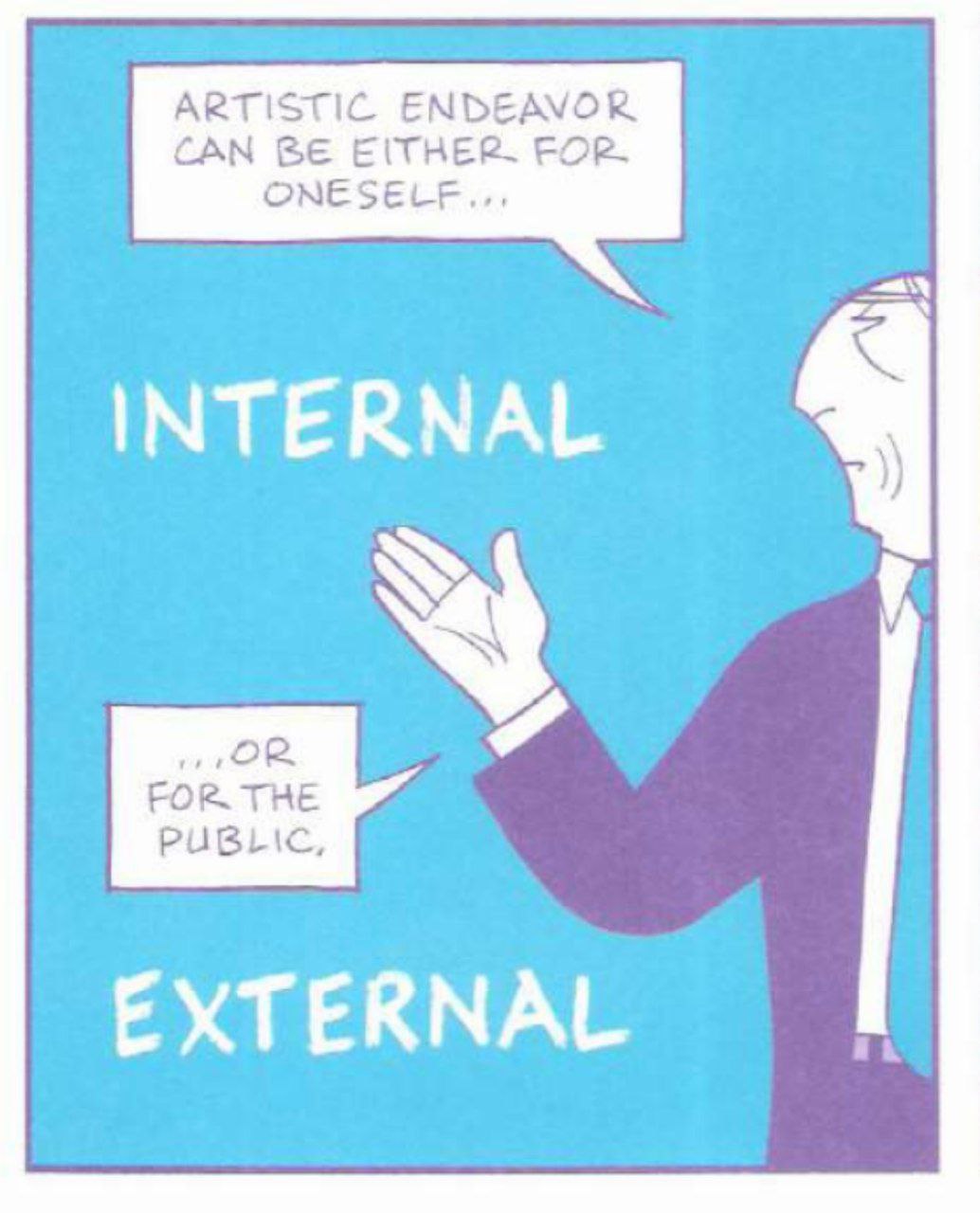
On a similar note, renowned American painter, Georgia O’Keeffe quotes how identifying the own individuality has helped to create best of her works.

“I know now that most people are so closely concerned with themselves that they are not aware of their own individuality. I can see myself, and it has helped me to say what I want to say—in paint.”


Art for oneself or for public. Sourced from Asterios Polyp, a novel by David Mazzucchelli

Leverage

No one really starts anything new, Mrs. Nemur. Everyone builds on other men’s failures. There is nothing really original in science. What each man contributes to the sum of knowledge is what counts.


No one can ever know in advance if a project is going to result in something useful. Results are often negative. We learn what something is not—and that is as important as a positive discovery to the man who is going to pick up from there. At least he knows what not to do.

from ‘Flowers for Algernon’ by Daniel Keyes.

Be it science or other aspects of society, the so-called invention cannot be credited to a single person or entity. When something new is discovered, it is always built upon the knowledge of previous failures or successes. In that way, every new invention is just an enhancement of previous attempts.

What Am I?

Who and what am I now? Am I the sum of my life or only of the past months?

from ‘Flowers for Algernon’ by Daniel Keyes.

What truly defines one’s character? I am a different person to different people around me. Each one knows me as a certain person by judging and experiencing the fragment of time they have spent with me. Only I know the true me, the one who has spent a lifetime with my real self. Does that make a person’s character a constant or a variable based on everyone’s perspective?